Introduction
Cooking rice consistently well is one of those small kitchen skills that can feel surprisingly tricky. Too much water and you end up with mush; too little and the bottom scorches while the top stays hard. For households that eat rice regularly — or anyone looking to simplify weeknight cooking — a digital rice cooker is often the appliance that quietly earns its place on the counter.
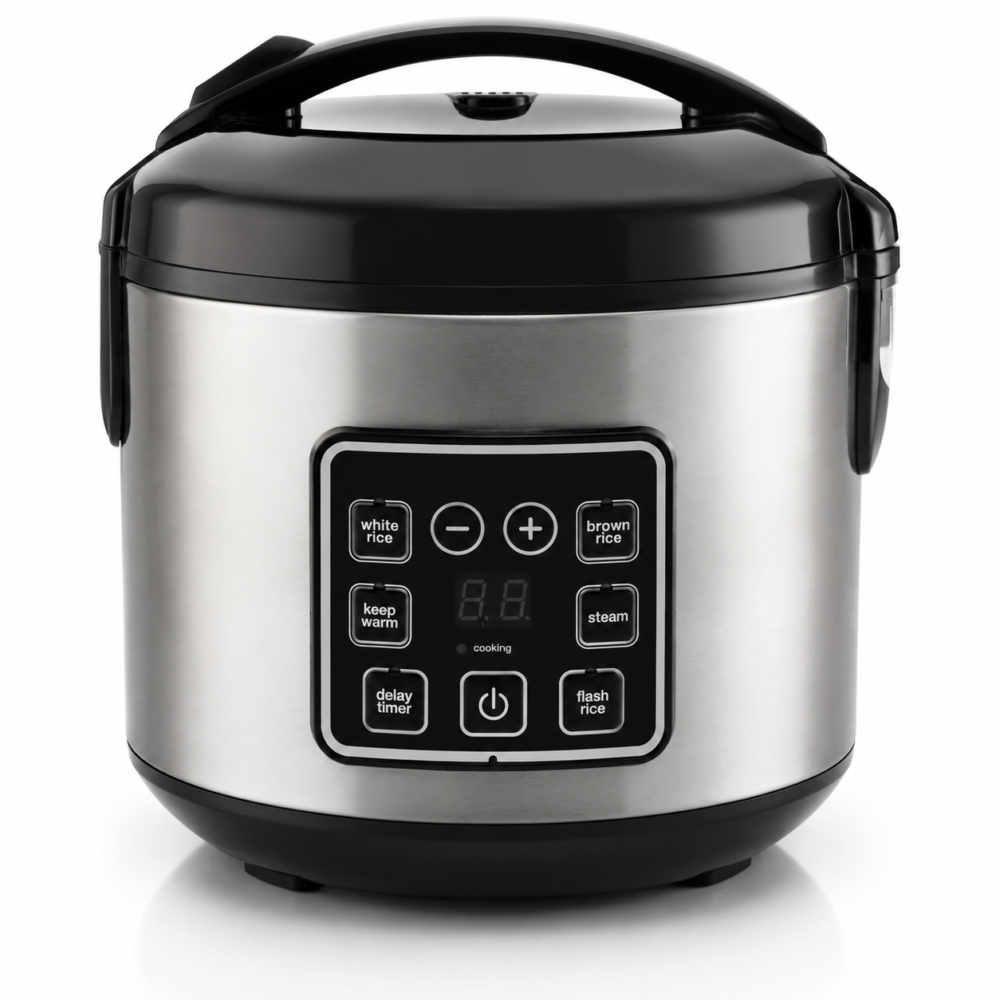
The AROMA Digital Rice Cooker, model ARC-914SBD, is built around that exact idea: take a task that’s easy to get wrong on the stovetop and make it repeatable. With a 4-cup uncooked / 8-cup cooked capacity and a 2-quart stainless steel design, it’s sized for small to medium households, and it goes beyond plain rice by including steaming and multicooking functions as well.
This article walks through what the ARC-914SBD offers, how it might fit into different kitchens and routines, and what factors are worth thinking about before deciding if it’s the right appliance for your needs. The goal here isn’t to tell you it’s the only option worth considering — it’s to give you a clear, balanced picture so you can make that call yourself.
Key Features
Digital Controls and Cooking Settings
Unlike older mechanical rice cookers that rely on a single switch, the ARC-914SBD uses a digital control panel. This generally allows for multiple pre-programmed settings tailored to different grains and foods, rather than a one-size-fits-all approach. Digital rice cookers in this category often include settings for white rice, brown rice, and other grains, along with separate functions for steaming vegetables or proteins.
The benefit of digital controls is consistency. Once a setting is selected, the appliance manages temperature and timing internally, which reduces the guesswork that often comes with stovetop cooking.
4-Cup / 8-Cup Capacity
The capacity is described in two ways — 4 cups uncooked and 8 cups cooked — which reflects how rice roughly doubles in volume once it absorbs water and cooks. A 4-cup uncooked capacity is a common middle-ground size: large enough to cook for a family meal or to prepare extra for leftovers, but not so large that it overwhelms a smaller kitchen or pantry shelf.
Steamer Function
Many digital rice cookers, including this model, come with a steamer tray or steaming capability built into the design. This allows vegetables, fish, or dumplings to be cooked using the steam generated while rice cooks below, or as a standalone steaming function. It’s a feature that effectively turns the appliance into a two-in-one tool: a starch and a side dish can be prepared at the same time, which can be useful on busy evenings.
Multicooker Functionality
Beyond rice and steaming, the “multicooker” label suggests the ARC-914SBD is designed to handle a broader range of dishes than a basic rice cooker. This often includes functions like slow cooking, oatmeal preparation, or one-pot grain dishes. The exact range of functions can vary, so it’s worth checking the current product listing and included manual on Amazon for the full list of available settings.
Stainless Steel Exterior
The stainless steel exterior is both a practical and aesthetic choice. Functionally, stainless steel tends to be more resistant to scratches and discoloration over time compared to plastic housings, and it’s relatively easy to wipe down after use. Aesthetically, it gives the appliance a cleaner, more modern look that can blend into a variety of kitchen styles, from minimalist to traditional.
Compact 2-Quart Size
At 2 quarts, the ARC-914SBD sits in a size range that’s manageable for most kitchen counters. It’s not a bulky, restaurant-style cooker, which makes it a reasonable fit for apartments, smaller kitchens, or households that don’t want to dedicate significant counter space to a single-purpose appliance.
How It Can Be Used
A digital rice cooker like this one tends to be more versatile than its name suggests. Here are some of the practical ways it can fit into everyday cooking:
Everyday rice preparation. The most obvious use is cooking white or brown rice for meals throughout the week. Because settings are pre-programmed, the process generally involves measuring rice and water, selecting the appropriate setting, and letting the machine handle the rest.
Batch cooking grains for meal prep. With an 8-cup cooked capacity, there’s room to prepare larger batches of rice or grains at once, which can then be portioned out and stored for use across several meals. This can be a time-saving approach for people who like to prep lunches or dinners in advance.
Steaming vegetables or proteins alongside rice. Using the steamer tray, vegetables like broccoli, carrots, or green beans can be steamed while rice cooks underneath. This is a practical way to get a more complete meal without needing a second pot or pan.
Cooking other grains. Beyond white rice, many digital rice cookers handle grains like quinoa, basmati, jasmine rice, or even oatmeal reasonably well, depending on the specific settings available. This expands the appliance’s usefulness beyond a single type of dish.
Simple one-pot meals. Depending on the multicooker settings included, some users find these appliances useful for preparing simple soups, stews, or rice-and-vegetable combinations in a single container, reducing cleanup.
Reheating and keeping food warm. Most rice cookers, including digital models like this one, include a “keep warm” function that activates automatically after cooking. This can be useful for households with staggered mealtimes, where not everyone eats at exactly the same moment.
Who It May Be Suitable For
This type of appliance tends to appeal to a fairly wide range of people, though it’s worth thinking through your own situation before deciding if it’s a good match.
Households that eat rice or grains regularly. If rice is a staple in your diet — whether as a side dish or a base for meals — a dedicated rice cooker can simplify the process considerably compared to stovetop methods.
People who want consistent results without constant supervision. Because the cooking process is automated, this kind of appliance suits people who want to start a meal and step away, rather than monitoring a pot closely.
Small to medium households. The 4-cup uncooked capacity is generally well suited to individuals, couples, or small families. Larger households with very high rice consumption might want to compare this capacity against their typical needs.
People interested in simplifying meal prep. The combination of rice cooking and steaming in one unit can appeal to anyone trying to streamline their cooking routine, particularly those who prepare meals for the week in advance.
Those who prefer a stainless steel aesthetic. For people who care about how their kitchen appliances look and want something that doesn’t feel purely utilitarian, the stainless steel exterior may be a relevant factor.
That said, it may be less essential for people who rarely cook rice or grains, or for those who already have a multicooker or pressure cooker that covers similar functions.
Important Things to Consider
Before purchasing any kitchen appliance, it helps to think through a few practical factors:
Counter and storage space. Even at a relatively compact 2-quart size, it’s worth measuring your available counter or storage space beforehand, especially if your kitchen already has several appliances competing for room.
Cleaning and maintenance. Removable, non-stick inner pots are common in rice cookers and tend to make cleanup easier. It’s worth checking the product listing or manual for specific guidance on whether parts are dishwasher-safe or require hand washing.
Learning the settings. Digital appliances with multiple functions can have a slight learning curve at first. Taking time to read through the included instructions can help you get more consistent results, particularly when cooking grains other than standard white rice.
Capacity versus household needs. While 4 cups uncooked / 8 cups cooked works well for many households, it’s worth comparing this to your typical batch sizes. If you regularly cook for large groups, you may want to confirm this capacity aligns with how much rice you usually prepare at once.
Power and electrical considerations. Like most electric kitchen appliances, a digital rice cooker requires access to a standard outlet near where it will be used, and reasonable clearance for ventilation during operation.
Warranty and support. Checking the manufacturer’s warranty terms and any available customer support resources is generally a good practice for electrical kitchen appliances, since this can vary by brand and model.
Comparing General Categories of Rice Cookers
It can help to understand where a digital multicooker like the ARC-914SBD fits within the broader landscape of rice-cooking appliances, without focusing on any single competing brand or product.
Basic mechanical rice cookers typically offer a single “cook” function with limited or no additional settings. They tend to be simpler and often more affordable, but they generally don’t offer the flexibility of multiple grain settings or built-in steaming functions.
Digital rice cookers with multiple settings, like the ARC-914SBD, generally sit in a middle category. They offer more precise control over different types of rice and grains, often include steaming functions, and provide automated timing — without necessarily reaching the complexity (or price point) of high-end pressure cookers.
Pressure-based multicookers represent another category altogether, often combining pressure cooking, slow cooking, and rice cooking in one unit. These can offer faster cooking times for certain foods due to pressure cooking, but they also tend to involve a steeper learning curve and a different set of safety considerations related to pressure release.
Each category serves a different kind of cook. Someone who wants simplicity might lean toward a basic mechanical model; someone who wants speed and broader functionality might consider a pressure multicooker; and someone who wants a balance of consistency, grain variety, and ease of use without the complexity of pressure cooking might find a digital model like this one to be a reasonable middle ground.
Frequently Asked Questions
Does this rice cooker work for grains other than white rice? Many digital rice cookers, including models in this category, include settings designed for brown rice and other grains. The specific list of compatible settings is best confirmed by checking the product details and included manual, since this can vary by model.
How does the steamer function work? Steaming typically involves placing a tray or basket above the cooking pot, where steam generated during cooking rises and cooks food placed in the tray. This allows vegetables or other foods to cook simultaneously with rice below.
Is the inner pot non-stick? Most digital rice cookers use a non-stick coated inner pot to make food release and cleanup easier, though it’s worth confirming this detail on the current product listing, as specifications can be updated over time.
Can it keep rice warm after cooking? A “keep warm” function is a standard feature on most digital rice cookers, including models in this category. This typically activates automatically once the cooking cycle finishes.
Is it suitable for a small kitchen? At 2 quarts, this model is generally considered compact relative to larger multicookers, making it a reasonable fit for smaller kitchens, though it’s still worth measuring your available space beforehand.
Does it require special rice-to-water ratios? Most digital rice cookers include general water-to-rice guidelines in their manual, often with markings inside the pot to help measure water accurately. Specific ratios can vary slightly depending on the type of rice or grain being cooked.
Conclusion
The AROMA Digital Rice Cooker (ARC-914SBD) is designed to simplify one of the more routine parts of home cooking: preparing rice and grains consistently, without needing to hover over a stovetop pot. With its 4-cup uncooked / 8-cup cooked capacity, built-in steamer function, multicooker settings, and stainless steel exterior, it’s positioned as a flexible option for households that want more than a single-purpose appliance, while still keeping things relatively simple compared to more complex pressure-based multicookers.
Whether it’s the right fit depends on your household size, how often you cook rice or grains, and how much counter space you’re willing to dedicate to a dedicated appliance. For many small to medium households looking for a reliable way to handle rice, grains, and light steaming in one unit, it’s a model worth learning more about.