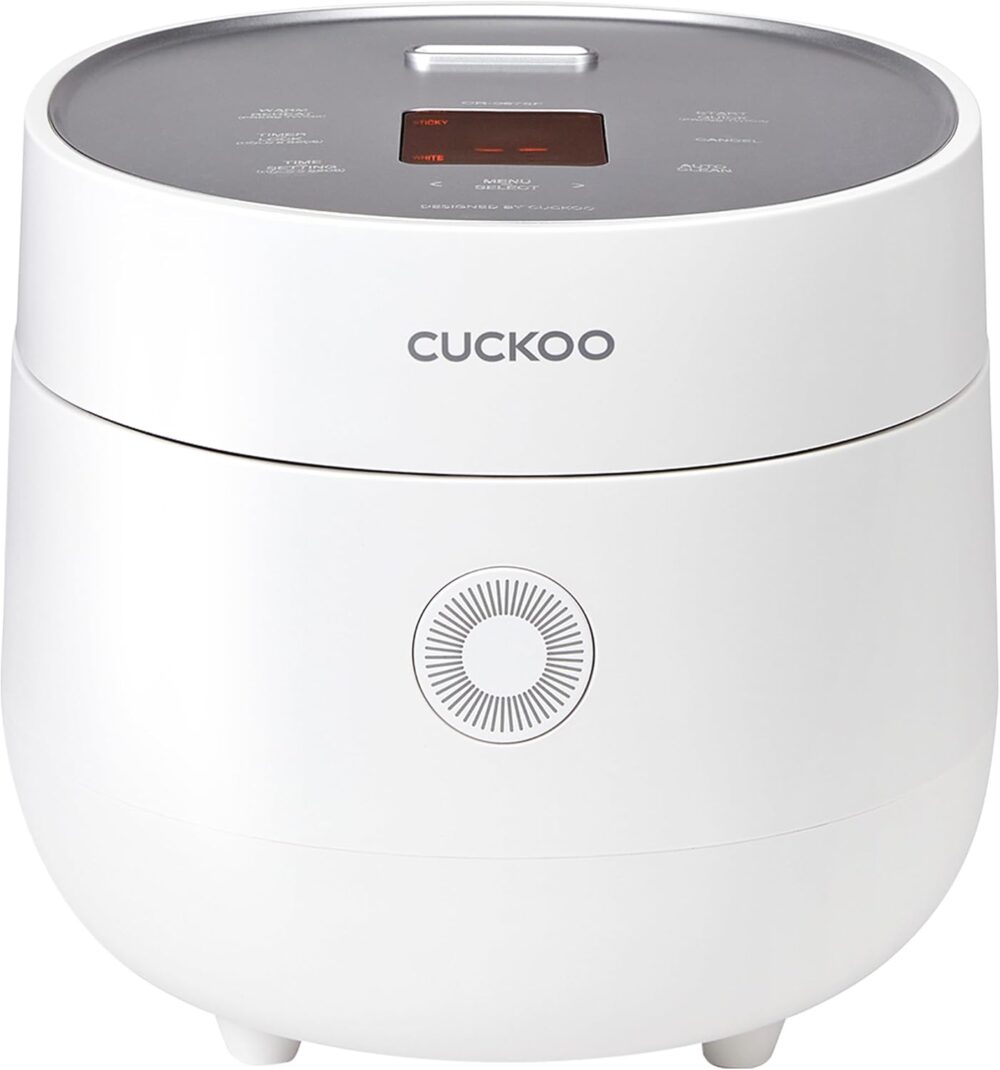
Rice has been a kitchen staple across countless cultures for thousands of years, yet getting it exactly right on the stovetop can be surprisingly tricky. Too much water and you end up with mush; too little and you’re left with a pot of half-cooked grains stuck to the bottom. This is where modern rice cookers come in, and one option that often comes up in conversations about home cooking technology is the CUCKOO Micom Rice Cooker, model CR-0675FW. This article takes a closer look at what this appliance offers, how it works, and the kinds of households that might find it useful, without leaning on exaggerated claims or sales-driven language. The goal here is simply to give you a clear, balanced picture so you can decide whether it fits your kitchen needs.
A Brief Look at What Micom Technology Means
Before diving into the specifics of this particular model, it helps to understand the term “Micom,” which stands for microcomputer. Micom rice cookers use small onboard computer chips paired with sensors to monitor temperature, humidity, and cooking time throughout the process. Instead of relying on a single fixed heat setting like many basic rice cookers do, a Micom cooker continuously adjusts its internal conditions based on what it detects happening inside the pot. This is often referred to as fuzzy logic technology, a term borrowed from a branch of computer science that deals with reasoning that isn’t strictly binary. In the context of rice cookers, fuzzy logic allows the appliance to make small, real-time adjustments rather than simply switching between “on” and “off.” The CUCKOO CR-0675FW incorporates this kind of technology, which is part of why it’s often categorized differently from more basic, single-function rice cookers.
Introduction to the CUCKOO CR-0675FW
The CUCKOO CR-0675FW is designed for households that cook rice regularly and want more flexibility than a standard one-button cooker typically provides. It’s built to handle six cups of uncooked rice, which translates to roughly twelve cups once cooked, making it a reasonably sized option for small to medium-sized families, or for anyone who likes to batch-cook rice for meal prep throughout the week. The unit comes in a clean white finish with a straightforward control panel, and it includes a nonstick inner cooking pot designed to make both cooking and cleanup more manageable.
What sets this model apart from entry-level rice cookers isn’t just the look of it, but the range of functions packed into its control panel. With nine distinct menu options, the CR-0675FW is built to handle more than plain white rice. This kind of versatility is increasingly common in mid-range rice cookers, as manufacturers recognize that many households use these appliances for more than a single type of grain.
Key Features
Fuzzy Logic Temperature Control
As mentioned, the standout feature of this model is its use of fuzzy logic technology. Rather than cooking rice on a fixed timer, the appliance’s internal sensors track temperature and moisture levels as the rice cooks, making micro-adjustments along the way. In theory, this approach is meant to reduce the common pitfalls of stovetop or basic rice cooker preparation, such as scorched bottoms or unevenly cooked grains, by responding to what’s actually happening inside the pot rather than following a rigid, pre-set pattern.
Nine Menu Options
The CR-0675FW includes nine separate cooking settings, which typically cover a range of grain types and textures. While exact labeling can vary slightly by model year, these settings generally include options for white rice, brown rice, mixed rice, GABA rice (a type of rice that’s been soaked to increase gamma-aminobutyric acid content), porridge, and sometimes settings tailored to specific textures like glutinous or sticky rice. Having this many presets means the cooker isn’t limited to a single rice type, which can be especially useful for people who like to rotate between short-grain, long-grain, or specialty rice varieties.
Quick Rice Mode
For situations where time is limited, the inclusion of a quick rice mode is worth noting. This setting is designed to shorten the typical cooking cycle, which can be helpful on busy weeknights when a full cooking cycle might not fit into the available time before dinner. It’s worth keeping in mind that quicker cooking cycles can sometimes involve trade-offs in texture compared to the standard setting, so this mode tends to work best when convenience is the priority.
Nonstick Inner Pot
The inner cooking pot features a nonstick coating, which serves two main purposes: making it easier to remove cooked rice without excessive scraping, and simplifying the cleanup process afterward. Nonstick coatings on rice cooker pots are fairly standard across the mid-to-high end of the market, but the quality and durability of that coating can vary between brands, so it’s a feature worth paying attention to over the long term.
Auto Clean Function
Cleaning a rice cooker isn’t always anyone’s favorite kitchen task, particularly when it comes to the steam vent and lid components where starchy residue tends to build up. The auto clean function on this model is designed to make that part of the process more convenient, helping to loosen residue so that wiping down the unit doesn’t require as much manual effort.
Compact, Functional Design
Despite its array of features, the CR-0675FW maintains a relatively compact footprint, which can be a meaningful consideration for kitchens with limited counter space. The white exterior is designed to blend into most kitchen color schemes without standing out as bulky or overly industrial-looking, which matters for people who plan to keep the appliance out on the counter rather than storing it away after each use.
How It Can Be Used
A rice cooker like this one isn’t limited to just steaming a pot of plain rice for dinner. Because of its multiple menu settings, there’s room to experiment with different grains and dishes throughout the week.
Everyday Meal Preparation
For many households, the most common use will simply be cooking rice to pair with proteins, vegetables, or stir-fries. Having a dedicated appliance for this frees up stovetop burners for other parts of the meal, which can be a small but meaningful convenience during busy dinner preparation.
Meal Prepping in Batches
Because the unit can handle up to twelve cups of cooked rice, it lends itself well to batch cooking. Some people prepare a larger quantity of rice at the start of the week, then portion it out into containers for grain bowls, fried rice, or side dishes over the following days. This can be a practical way to streamline weekday cooking, particularly for anyone managing a busy schedule.
Exploring Different Grain Types
With settings built for brown rice, mixed grains, and GABA rice, this cooker also opens the door to trying ingredients that might otherwise require more guesswork on the stovetop. Brown rice, for instance, typically needs a longer cooking time and more water than white rice, and getting that ratio wrong on a stovetop can lead to undercooked or overly mushy results. Having a dedicated setting removes some of that trial and error.
Porridge and Congee
The porridge setting is worth a specific mention, as congee and rice porridge are dishes that benefit from slow, even cooking and can be difficult to get right using a regular pot. A dedicated setting designed for this consistency can make the process more predictable.
Reheating and Keeping Rice Warm
Like most rice cookers in this category, the CR-0675FW likely includes a keep-warm function that activates automatically after the cooking cycle finishes. This can be useful for households where mealtimes don’t always align perfectly, allowing rice to stay at a safe, ready-to-eat temperature without drying out too quickly.
Who It May Be Suitable For
This type of rice cooker tends to appeal to a fairly broad range of users, though it’s not necessarily the right fit for everyone.
Households That Cook Rice Frequently
For families or individuals who eat rice as a regular part of their diet, particularly across different cuisines that rely on varying grain types, the range of menu options can be genuinely useful. Those who only cook rice occasionally might not need this level of functionality.
People Who Value Consistency
Because fuzzy logic technology is designed to reduce guesswork, this kind of cooker may appeal to people who have struggled with getting consistent results from basic cookers or stovetop methods.
Meal Preppers
As mentioned earlier, the larger capacity and batch-cooking capability make this a reasonable option for anyone who prepares meals in bulk for the week ahead.
Those Interested in Healthier Grain Options
The inclusion of settings for brown rice and GABA rice suggests this model may also suit people who are trying to incorporate more whole grains into their diet but have found those grains harder to cook properly using conventional methods.
Smaller Households or Limited Kitchen Space
Given its moderate capacity and relatively compact design, it could also work well for smaller households that don’t need an industrial-sized cooker but still want more functionality than the most basic models offer.
On the other hand, very large families or those who regularly cook for big groups might want to look at larger-capacity options, since twelve cups of cooked rice, while substantial, may not be enough for bigger gatherings or commercial-style needs.
Important Things to Consider
No appliance is a perfect fit for every kitchen, and it’s worth thinking through a few practical points before deciding if this model aligns with your needs.
Counter Space and Storage
While the unit is described as compact relative to its feature set, it’s still a dedicated countertop appliance, which means you’ll need to factor in available space, both for everyday use and storage if you don’t plan to leave it out permanently.
Learning the Settings
With nine different menu options, there may be a bit of a learning curve involved in understanding which setting works best for different rice types or dishes. Referring to the included instruction manual when first using the cooker can help avoid early trial-and-error frustration.
Maintenance Over Time
Even with a nonstick coating and an auto clean function, regular manual cleaning of the inner pot, lid, and steam vent is still necessary to keep the appliance functioning well over the long term. Nonstick coatings, in general, can also degrade gradually with extensive use, so being mindful of how utensils are used with the pot (avoiding metal utensils, for example) can help extend its lifespan.
Power and Outlet Requirements
As with any countertop electric appliance, it will need a dedicated outlet nearby, and the cord length should be checked against your kitchen layout to ensure convenient placement.
Comparing General Categories of Rice Cookers
To put this model into context, it can help to understand how it compares to other broad categories of rice cookers on the market, without focusing on specific competing brands.
Basic Rice Cookers
These are typically single-function appliances that use a simple “cook” and “keep warm” switch, often relying on a basic thermostat rather than computerized sensors. They tend to be more affordable and simpler to operate, but they generally offer less precision and fewer options for different grain types.
Micom Rice Cookers (like the CR-0675FW)
This category, which includes the CUCKOO model discussed here, uses microcomputer-based fuzzy logic to adjust cooking conditions in real time. These cookers usually offer multiple menu settings and tend to produce more consistent results across different types of rice, though they typically come at a higher price point than basic models.
Pressure-Based Rice Cookers
Some rice cookers incorporate pressure cooking technology, which can reduce cooking times and is sometimes marketed as producing a different texture, particularly for brown rice or grains that usually take longer to cook. These models can be more complex to operate and clean, given the additional sealing components involved.
Induction Heating (IH) Rice Cookers
At the higher end of the market, induction heating rice cookers use a different heating method that heats the entire pot more evenly rather than just the base. These tend to be the most expensive category and are often aimed at users who want the most precise control over texture and consistency.
Understanding where the CR-0675FW fits, as a Micom-based cooker with fuzzy logic, can help set realistic expectations. It generally sits in the middle ground: more capable and consistent than a basic cooker, while typically being more accessible in terms of price and complexity than premium pressure or induction models.
Frequently Asked Questions
Does this rice cooker work for grains other than rice?
While it’s primarily designed for various types of rice, including white, brown, mixed, and GABA rice, some users also experiment with grains like quinoa using the standard or porridge settings. Results can vary, so it may take some adjustment to find the right water ratio for non-rice grains.
How long does the keep-warm function typically last?
Keep-warm functions on Micom rice cookers generally allow rice to stay warm for several hours after cooking, though it’s generally recommended not to leave rice on keep-warm indefinitely, as texture and quality can decline over extended periods.
Is the inner pot dishwasher safe?
This can vary, and it’s best to check the specific care instructions included with the unit, since nonstick coatings can sometimes be more sensitive to dishwasher detergents and high heat over repeated cycles.
Does fuzzy logic technology really make a noticeable difference?
Many users who switch from basic cookers to fuzzy logic models report more consistent texture results, particularly when cooking grains that are more sensitive to water ratios, like brown rice. That said, results can still depend on factors like rinsing the rice beforehand and measuring water accurately.
How noisy is the cooking process?
Most Micom rice cookers, including this category of appliance, tend to operate relatively quietly during the cooking cycle, with some audible steam release as part of normal operation.
Can it be used to cook rice for non-rice dishes, like risotto?
Because rice cookers like this one are optimized for steaming and absorption-style cooking rather than the stirring and gradual liquid addition required for risotto, it’s generally better suited to traditional rice and porridge dishes rather than dishes that depend on stovetop techniques.
Conclusion
The CUCKOO Micom Rice Cooker CR-0675FW represents a mid-range option for households looking to move beyond basic rice cooking appliances without necessarily investing in the most advanced induction or pressure-based models. Its use of fuzzy logic technology, combined with nine distinct menu settings, a nonstick inner pot, and an auto clean function, positions it as a versatile tool for anyone who regularly prepares different types of rice or grains at home. Like any kitchen appliance, it comes with practical considerations around space, maintenance, and the learning curve associated with its various settings, but for those who value consistency and variety in their rice preparation, it may be worth exploring further as part of your kitchen setup.