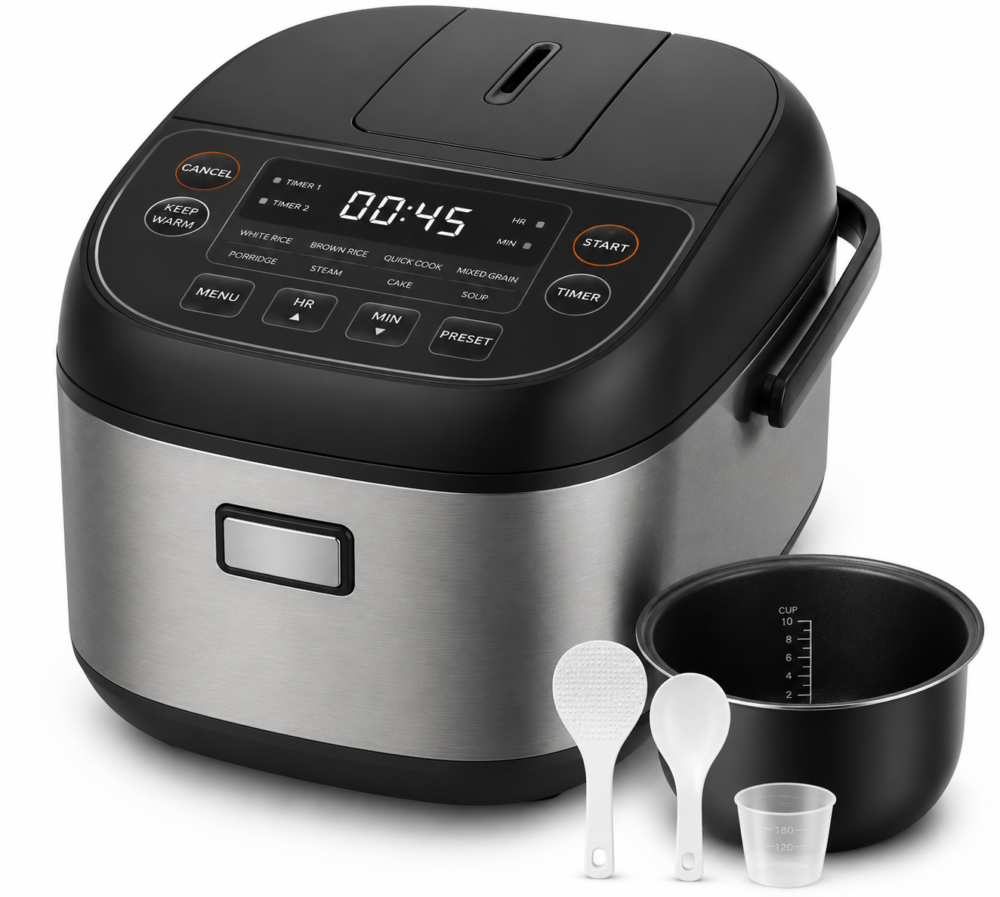
Cooking rice seems like it should be simple, yet anyone who has dealt with scorched bottoms, mushy grains, or uneven texture knows that getting it right consistently takes more than just a pot and a stove. This is where compact rice cookers, like the Toshiba Mini Rice Cooker designed for 3 cups of uncooked rice, come into the picture. Built with fuzzy logic technology, one-touch cooking, a 24-hour delay timer, and an automatic keep-warm function, this small appliance is aimed at people who want consistent results without the guesswork that often comes with stovetop cooking.
In this article, we’ll walk through what this rice cooker offers, how it might fit into different kitchen routines, who tends to benefit most from a compact cooker like this one, and what to keep in mind before adding it to your countertop. The goal here isn’t to tell you this is the only option out there, but rather to give you enough information to decide whether it aligns with your cooking habits and space requirements.
Key Features
Fuzzy Logic Technology
One of the more notable aspects of this rice cooker is its use of fuzzy logic, a type of computer-based logic system that allows the appliance to make small adjustments during the cooking process. Rather than following one fixed cooking program regardless of conditions, fuzzy logic technology is designed to sense variables like moisture content and temperature, then adjust cooking time and heat output accordingly. In practical terms, this means the cooker attempts to compensate for differences in rice type, water ratio, or even room temperature, which can otherwise lead to inconsistent results in simpler cookers.
This kind of technology has been used in rice cookers for years, particularly in cookers designed for Japanese-style short grain rice, but it has gradually become more common in smaller, more affordable units as well. For someone who has struggled with stovetop rice turning out unevenly cooked or sticking to the bottom of the pot, this feature is meant to reduce that kind of trial and error.
Compact 3-Cup Capacity
This particular model is built for smaller households, single individuals, couples, or anyone who doesn’t need to cook large batches of rice at once. The 3-cup uncooked rice capacity translates to roughly 6 cups of cooked rice, depending on the variety and how much water absorption occurs during cooking. That amount is generally enough for two to four servings, which makes it a reasonable choice for smaller families, students living in dorms or apartments, or people who simply don’t want a bulky appliance taking up valuable counter or storage space.
Smaller capacity cookers like this one are often appreciated in kitchens where space is limited, such as studio apartments, RVs, or office break rooms. The compact footprint also tends to make storage easier when the appliance isn’t in daily use.
One-Touch Cooking
The one-touch cooking function is designed to simplify the process as much as possible. Rather than requiring multiple settings or manual adjustments, users typically add rice and water, close the lid, and press a single button to begin cooking. The appliance then handles the rest, switching automatically from the cooking cycle to the warming cycle once the rice has finished.
This kind of simplicity can be particularly useful for individuals who are new to cooking, people with busy schedules, or anyone who wants to minimize the number of steps involved in meal preparation. It also reduces the chances of human error, such as forgetting to turn off the heat or misjudging cooking time.
24-Hour Delay Timer
A delay timer is a feature that allows users to set the cooker to begin cooking at a specific time in the future, up to 24 hours in advance. This can be especially useful for planning meals around a work schedule. For example, rice could be set up in the morning before leaving for work, timed to finish cooking right around dinner time, or prepared the night before for a hot breakfast option.
This kind of scheduling flexibility tends to appeal to people with structured daily routines, such as those who meal prep, commute long hours, or manage a household with multiple moving parts. It’s worth noting that delay timers are generally not recommended for highly perishable ingredients, since food sitting at room temperature for extended periods before cooking can pose food safety concerns. For plain rice, however, this is less of a concern compared to dishes involving meat or dairy.
Automatic Keep Warm Function
Once the rice has finished cooking, the keep-warm setting activates automatically to maintain an appropriate serving temperature without continuing to cook the rice further. This feature is helpful in households where mealtimes don’t always align perfectly, such as when family members eat at different times, or when rice is being used throughout the day for multiple meals.
Keep-warm functions vary in how long they can safely maintain food, so it’s generally a good idea to check the manufacturer’s guidance on recommended maximum warming duration to avoid texture changes or drying out.
Steaming Capability
In addition to cooking rice, many compact cookers in this category, including this one, often include a steaming function or accessory, which allows for steaming vegetables, dumplings, or other foods either on their own or simultaneously with rice. This adds a layer of versatility to the appliance, making it useful beyond just rice preparation.
Simple White Design
The cooker comes in a clean white finish, which tends to blend easily into most kitchen aesthetics, whether the rest of the kitchen leans toward modern minimalism or more traditional styling. A simple, neutral design can also make it easier to place on shared counter space without clashing with other appliances.
How It Can Be Used
A compact rice cooker like this one isn’t limited to just preparing plain white rice. Here are some practical ways it can be incorporated into everyday cooking:
Everyday Rice Preparation: The most obvious use is cooking white rice, brown rice, jasmine rice, basmati rice, or other rice varieties as a base for meals. Because of the fuzzy logic technology, the cooker is generally able to adjust for differences between rice types reasonably well, though some users still prefer to fine-tune water ratios based on personal preference.
Meal Prepping for the Week: Since the cooker handles rice with minimal supervision, it can be used to batch-cook rice in advance, which can then be portioned out and stored for use throughout the week in grain bowls, stir-fries, or side dishes.
Steaming Vegetables: Using the steaming function, vegetables like broccoli, carrots, or green beans can often be prepared alongside or separately from rice, allowing for a more complete meal to be made using a single appliance.
Cooking Other Grains: Some users experiment with cooking grains beyond rice, such as quinoa or certain types of porridge, though water ratios and cooking times typically need to be adjusted manually since the cooker’s presets are generally calibrated for rice.
Simple One-Pot Dishes: Some rice cookers can also be used to prepare simple dishes that combine rice with vegetables, proteins, or seasonings added directly into the cooking pot, though this depends on the specific model’s capabilities and is generally more common with larger multi-function cookers.
Reheating Leftover Rice: The keep-warm or reheat function can also serve to gently warm previously cooked rice without drying it out as quickly as a microwave sometimes does.
Who It May Be Suitable For
This type of compact rice cooker tends to appeal to a fairly specific range of users, including:
- Individuals living alone or in small households who don’t need to cook large quantities of rice regularly and want a smaller appliance that doesn’t dominate counter space.
- College students or dorm residents who need a simple, low-maintenance way to prepare meals without access to a full kitchen.
- People new to cooking who want a straightforward appliance that minimizes the chances of error, particularly when it comes to something as foundational as rice.
- Busy professionals who appreciate the delay timer function for planning meals around unpredictable schedules.
- Those living in small apartments, RVs, or shared housing where appliance size and storage space are practical concerns.
- People who eat rice frequently and want a dedicated appliance rather than relying on stovetop methods that require more attention and monitoring.
On the other hand, larger families or those who frequently cook large batches of rice for gatherings may find that a higher-capacity cooker suits their needs better, since this model is specifically designed around smaller quantities.
Important Things to Consider
Before purchasing any kitchen appliance, it helps to think through a few practical considerations:
Capacity Limitations: Because this is a 3-cup uncooked rice cooker, it isn’t designed for large-batch cooking. Those who frequently host gatherings or cook for larger families may need a bigger unit, or possibly use this one for smaller side dishes while preparing larger portions elsewhere.
Cleaning and Maintenance: Like most rice cookers, regular cleaning of the inner pot, lid, and steam vent is generally necessary to maintain performance and hygiene. It’s worth checking whether the inner pot is dishwasher-safe or requires hand washing, as this can affect day-to-day convenience.
Non-Stick Coating Durability: Many rice cookers use a non-stick interior coating to prevent rice from sticking and to make cleaning easier. Over time, depending on usage and care, non-stick coatings can wear down, so using appropriate utensils, such as plastic or silicone rather than metal, can help extend the lifespan of the pot.
Learning Curve for Different Rice Types: While fuzzy logic technology is designed to adjust automatically, some users still find that achieving their preferred texture takes a bit of experimentation, particularly when switching between rice varieties with different starch content, such as short grain versus long grain rice.
Storage Space: Even though this is a compact model, it’s still worth measuring your available counter or cabinet space beforehand to ensure it fits comfortably within your kitchen setup.
Power Requirements and Cord Length: As with most countertop appliances, checking the cord length and ensuring it reaches a nearby outlet comfortably is a small but practical detail worth considering.
Comparing General Categories of Rice Cookers
To put this type of appliance into context, it can help to understand how compact rice cookers like this one generally compare to other broad categories on the market, without focusing on any specific competing brand or product.
Basic Rice Cookers: These typically offer a single cook setting with minimal customization. They tend to be more affordable but may produce less consistent results across different rice types, since they don’t adjust cooking parameters dynamically.
Fuzzy Logic Rice Cookers: This category, which includes the Toshiba model discussed here, generally offers more refined cooking adjustments, aiming for more consistent texture across a wider range of rice varieties. These often come at a moderate price point compared to basic models, reflecting the added technology.
Multi-Function or Pressure Rice Cookers: These larger appliances often include additional functions like pressure cooking, slow cooking, or baking, and tend to have larger capacities. They are generally bulkier and more expensive, making them better suited for households that want an all-in-one cooking appliance rather than a dedicated, space-saving option.
Mini or Travel-Sized Cookers: Some cookers are designed specifically for very small portions, such as single servings, and may lack some of the more advanced features like delay timers or fuzzy logic adjustment.
Understanding where a product like this fits within these general categories can help clarify whether it aligns with your specific needs, whether that’s prioritizing simplicity, capacity, advanced features, or overall footprint.
Frequently Asked Questions
Does fuzzy logic guarantee perfect rice every time? Fuzzy logic technology is designed to improve consistency by adjusting cooking parameters based on sensed conditions, but results can still vary depending on water-to-rice ratio, rice freshness, and personal texture preferences. It’s generally seen as a helpful feature rather than an absolute guarantee.
Can this cooker be used for grains other than rice? While it’s primarily designed for rice, some users do experiment with other grains like quinoa. However, since the preset programs are typically calibrated for rice, manual adjustments to water levels and timing may be necessary for best results with other grains.
How long can the keep-warm function safely maintain rice? This can vary by model, so checking the included instruction manual for the manufacturer’s specific recommendations is generally the best approach to avoid texture changes or food safety concerns from extended warming periods.
Is the inner pot dishwasher safe? This depends on the specific materials and coating used. It’s best to refer to the product manual or listing details to confirm proper cleaning methods.
Is a delay timer safe to use with plain rice? Generally, yes, since plain rice and water don’t carry the same food safety concerns as more perishable ingredients. However, it’s still good practice to follow general food safety guidelines regarding how long ingredients sit before cooking begins.
How much rice does this cooker yield once cooked? A 3-cup uncooked capacity typically yields approximately 6 cups of cooked rice, though this can vary slightly depending on rice type and water absorption.
Does this cooker work well for brown rice? Many fuzzy logic cookers include settings or are capable of adjusting for brown rice, which generally requires longer cooking times and more water compared to white rice. Checking the specific settings available on this model can help clarify compatibility.
Conclusion
The Toshiba Mini Rice Cooker offers a combination of practical features aimed at simplifying rice preparation for smaller households, individuals, or anyone looking to minimize the effort involved in cooking rice consistently. With fuzzy logic technology, one-touch operation, a 24-hour delay timer, and an automatic keep-warm function, it’s designed to bring a level of convenience and consistency that basic stovetop methods often lack.
That said, like any kitchen appliance, it’s worth weighing your specific needs, such as how much rice you typically cook, how much counter space you have available, and whether additional features like steaming functionality align with how you plan to use it. For those who eat rice regularly and want a compact, low-maintenance solution, this type of cooker may be a practical addition to a smaller kitchen setup.