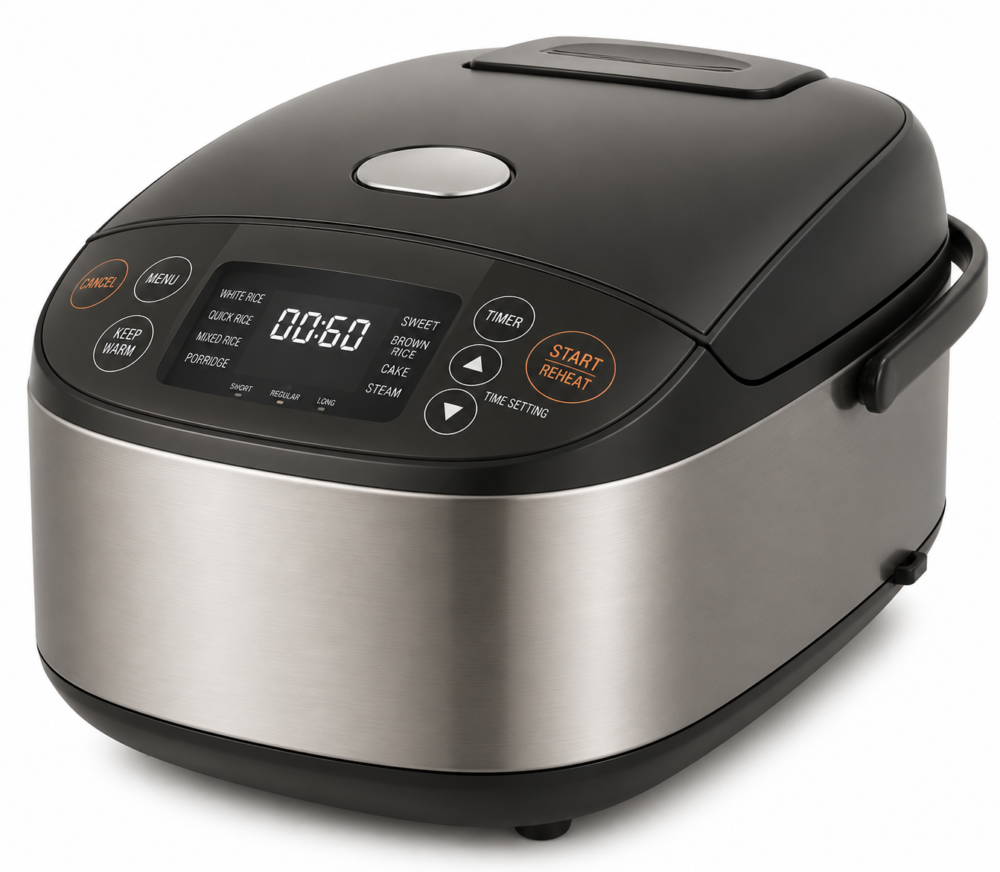
Rice holds a central place in countless kitchens around the world, whether it’s served as a side dish, the base of a stir-fry, or the foundation of a full meal. For many home cooks, getting rice exactly right — fluffy, evenly cooked, not too sticky or too dry — can be surprisingly tricky when relying on a stovetop pot. This is where dedicated rice cookers come into the picture, and among the many options available, the Zojirushi NS-TSC10 Micom Rice Cooker and Warmer has become a fairly well-known name in kitchens that take rice preparation seriously.
This article takes a closer look at what this particular model offers, how it fits into different kitchen routines, and what kind of household might find it useful. Rather than presenting this as a sales pitch, the goal here is to walk through the practical details so you can decide whether it aligns with your own cooking habits and needs.
What Is the Zojirushi NS-TSC10?
The NS-TSC10 is a compact rice cooker designed to prepare up to 5.5 cups of uncooked rice, which typically translates to a larger volume once cooked, since rice expands significantly during the cooking process. It falls into the “Micom” category of rice cookers, which stands for microcomputer technology. In simple terms, this means the appliance relies on built-in sensors and programmed logic to monitor temperature and adjust cooking time automatically, rather than using a simple on/off heating mechanism found in more basic rice cookers.
Zojirushi, the manufacturer, is a Japanese company that has produced kitchen appliances for decades, and rice cookers in particular have long been one of their specialties. The NS-TSC10 reflects that background, combining functional design with a focus on consistent results across different types of rice.
Key Features
Micom Fuzzy Logic Technology
One of the defining characteristics of this rice cooker is its fuzzy logic system. Instead of applying a single fixed heating pattern regardless of what’s inside the pot, the microcomputer technology adjusts the cooking process based on factors like the amount of rice and water present. This is intended to help reduce common issues such as undercooked grains in the center or a layer of overly soft rice at the bottom.
Multiple Cooking Settings
The NS-TSC10 includes several preset menu options tailored to different types of rice and grains. These commonly include settings for white rice, sushi rice, mixed rice, porridge, and sometimes brown rice or other grain varieties, depending on the specific model configuration. Having these presets allows the appliance to apply slightly different time and temperature combinations suited to each type, rather than treating all rice the same way.
Extended Keep-Warm Function
After the cooking cycle finishes, the unit can automatically switch into a keep-warm mode. This is a fairly standard feature among rice cookers, but the way Zojirushi implements it tends to be more refined, helping maintain texture and moisture over a longer period rather than letting rice dry out or become overly firm while sitting in the cooker.
Delay Timer
Many households appreciate the inclusion of a delay timer function, which allows rice preparation to be scheduled in advance. This can be useful for planning meals around a work schedule or simply having rice ready at a specific time without needing to start the cooking process manually at that exact moment.
Nonstick Inner Cooking Pan
The cooking pan inside the unit typically features a nonstick coating, which serves two main purposes: making it easier to remove cooked rice without it sticking excessively to the surface, and simplifying the cleanup process afterward.
Compact Footprint
Compared to larger rice cookers designed for bigger households or commercial kitchens, the 1.0-liter capacity of the NS-TSC10 makes it a relatively space-conscious option, suitable for kitchens where counter space is limited.
How It Can Be Used
While the most obvious use case is preparing plain white or brown rice as a side dish, rice cookers like this one tend to be more versatile than people initially expect. Here are some practical ways this type of appliance is commonly used in everyday cooking:
Everyday Side Dish Preparation The most straightforward use is cooking rice to accompany meals such as stir-fries, curries, grilled proteins, or vegetable dishes. Having a dedicated appliance frees up stovetop space and reduces the need to monitor a pot closely.
Sushi Rice for Homemade Rolls Because sushi rice requires a particular texture — sticky enough to hold together but not mushy — having a preset designed specifically for this purpose can make homemade sushi or rice balls more consistent without requiring advanced technique.
Mixed Rice Dishes Some cooks use the mixed rice setting to prepare dishes that combine white rice with other ingredients like vegetables, beans, or seasonings, allowing the appliance to handle the additional moisture content differently than it would for plain rice.
Porridge or Congee For those who enjoy rice porridge, often eaten as a comfort food or breakfast dish in various cuisines, the dedicated porridge function can simplify what is normally a more hands-on, slow-cooking process on the stove.
Reheating and Holding Rice for Later The keep-warm function makes it practical to cook rice ahead of time, whether for meal prepping during the week or simply having rice ready before the rest of a meal is finished cooking.
Who It May Be Suitable For
Given its features and capacity, the NS-TSC10 tends to appeal to a fairly specific range of households and cooking habits, including:
Individuals or small families who regularly eat rice and want consistent results without manually adjusting cooking times.
Home cooks interested in Japanese cooking techniques, including sushi preparation, who want a tool calibrated for that style of rice.
People who value convenience features like delayed start times, especially those balancing busy schedules.
Anyone looking to move away from stovetop rice preparation due to inconsistent results or the need to monitor the pot closely.
That said, it may not be the right fit for every kitchen. Larger households that regularly cook rice in bulk, for example, for gatherings or meal prepping for many people, might find the 5.5-cup uncooked capacity limiting compared to higher-capacity rice cookers designed for larger volumes.
Important Things to Consider
Before deciding whether this type of rice cooker fits your needs, there are a few practical points worth thinking through:
Capacity Relative to Household Size Since this model is designed for up to 5.5 cups of uncooked rice, it’s worth considering how much rice your household typically consumes in a single sitting or over a few days, particularly if you plan to cook in batches.
Counter Space and Storage While compact compared to larger units, it still requires a dedicated spot in the kitchen, both for everyday use and storage when not in use.
Cleaning and Maintenance Like most rice cookers, the inner pot, lid, and steam vent components generally need regular cleaning to maintain performance and hygiene. Reviewing the manufacturer’s care instructions can help extend the appliance’s lifespan.
Cooking Times for Different Settings Specialized settings like porridge or brown rice often involve longer cooking cycles compared to standard white rice. This is worth factoring into meal planning, especially on busier days.
Learning Curve for Settings While the presets are designed to simplify cooking, new users may want to spend some time getting familiar with which setting works best for their preferred rice type and desired texture.
Comparing General Categories of Rice Cookers
Rather than comparing specific competing products, it can be helpful to understand how different categories of rice cookers generally differ, so you can better judge where a Micom-style cooker like the NS-TSC10 fits in.
Basic On/Off Rice Cookers These are typically the most affordable and simplest option, using a single heating element that switches off once a certain temperature is reached. They can work well for straightforward white rice preparation but generally offer less flexibility for different rice types or textures.
Micom (Microcomputer) Rice Cookers This category, which includes the NS-TSC10, uses sensor-based technology to adjust cooking parameters dynamically. These cookers tend to offer more consistent results across different rice varieties and often include multiple preset functions, though they are usually priced higher than basic models.
Induction Heating (IH) Rice Cookers A step above Micom models in terms of technology, induction heating cookers heat the inner pot directly and more evenly, which can further improve consistency, particularly for larger quantities or more delicate rice types. These models are generally positioned at a higher price point.
Multi-Function Pressure Cookers with Rice Settings Some all-in-one appliances, such as multi-cookers, include a rice cooking function alongside other capabilities like pressure cooking, slow cooking, or steaming. These can be appealing for kitchens looking to consolidate appliances, though dedicated rice cookers are often noted for being more finely tuned specifically for rice texture and consistency.
Understanding these general categories can help clarify that a Micom-style cooker tends to sit in a middle range, offering more refinement than basic models while remaining more specialized and often more compact than larger multi-function appliances.
Frequently Asked Questions
Does this rice cooker work for both white and brown rice? Yes, the NS-TSC10 typically includes presets for multiple rice types, including white and brown rice, each calibrated with different cooking times and temperatures to suit the grain.
How long does it take to cook a standard batch of white rice? Cooking times can vary depending on the quantity and rice type, but standard white rice cycles in Micom cookers generally take somewhere in the range of 30 to 50 minutes, including the time needed for the appliance to reach proper cooking temperature.
Can it be used to cook rice for sushi? Yes, this is one of the more commonly used presets, designed to produce the stickier texture needed for sushi rice without making it overly mushy.
Is the inner pot dishwasher safe? This can vary, so it’s best to check the specific care instructions provided with the unit. Many nonstick rice cooker pots are recommended for hand washing to help preserve the coating over time.
How long can rice be kept warm without affecting quality? While the keep-warm function is designed to maintain rice for an extended period, most manufacturers recommend not exceeding somewhere around 12 hours to preserve optimal texture and food safety standards.
Does it require special rice measuring cups? Many Zojirushi rice cookers include a proprietary measuring cup, which may differ slightly from a standard U.S. cup measurement. Using the provided cup, along with the included water level markings inside the pot, generally produces the most accurate results.
Is it suitable for cooking other grains besides rice? Some users do experiment with grains like quinoa or certain rice blends, though results can vary since the appliance is primarily calibrated for rice. Checking specific guidance for non-rice grains is recommended before relying on it as a primary method.
Conclusion
The Zojirushi NS-TSC10 represents a fairly specialized category of kitchen appliance, built around the idea that rice preparation benefits from more nuanced, sensor-driven control rather than a one-size-fits-all heating approach. Its combination of multiple cooking presets, a keep-warm function, and a moderate, kitchen-friendly capacity makes it a relevant option for individuals and smaller households who regularly include rice in their meals and want a degree of consistency that can be harder to achieve on the stovetop.
As with any kitchen appliance, the right choice ultimately depends on your specific cooking habits, household size, and how often rice features in your meals. Taking time to consider capacity needs, available counter space, and the types of rice or grains you cook most often can help determine whether this particular model aligns well with your kitchen routine.